

Targeting Youth…
…because it’s easy to enact legislation affecting a disenfranchised population.

To hear Governor Janet Mills and other state leaders extol the virtues of the newly enacted “Bell to Bell” cellphone ban for all Maine schools, you’d think it was designed to truly address risk to youth, like a red flag law might.
I’ve long maintained that while mental health is a factor in rampage school shootings, one cannot legislate it in the same way one might a material object like a weapon. I’ve also pointed out to college students I’ve taught that they are are a disadvantaged group within the current age structure of the population.
In Cultures of Peace, her offering for the UNESCO’s Culture of Peace Program, the late great peace researcher Elise Boulding explored the possibilities for youth’s political empowerment while decrying “disrespect” for them.1
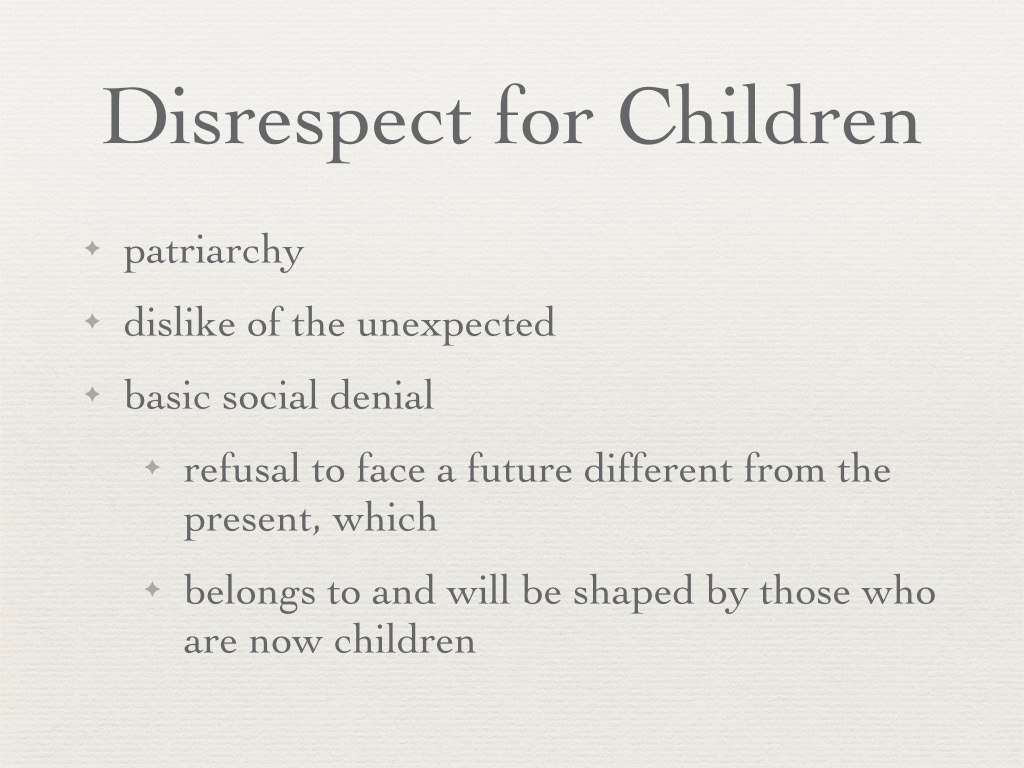
I think this legislation indicates such disrespect. I’m not arguing that cell phone use by youth is unproblematic. I’m not arguing for unbridled access to technology in schools. I am arguing that prohibition of technology discourages healthy and empowering uses of it. AI is arguably far more destructive to learning, yet we see ambivalence about its use. (Again, Mills refused to support a moratorium on data centers.) Further, I’d prefer to see mature confrontation of serious and tangible threats to school safety beyond the “duck and cover” of ALICE drills.
To help build a better future from the shards we are leaving youth, we need more to partner with them, than to target them.
Boulding, Elise 2000. Cultures of Peace: The Hidden Side of History Syracuse, NY: Syracuse University Press